Address
Near container Market Salamat Pura
Lahore

Different Types of Earthing Systems & Their Applications

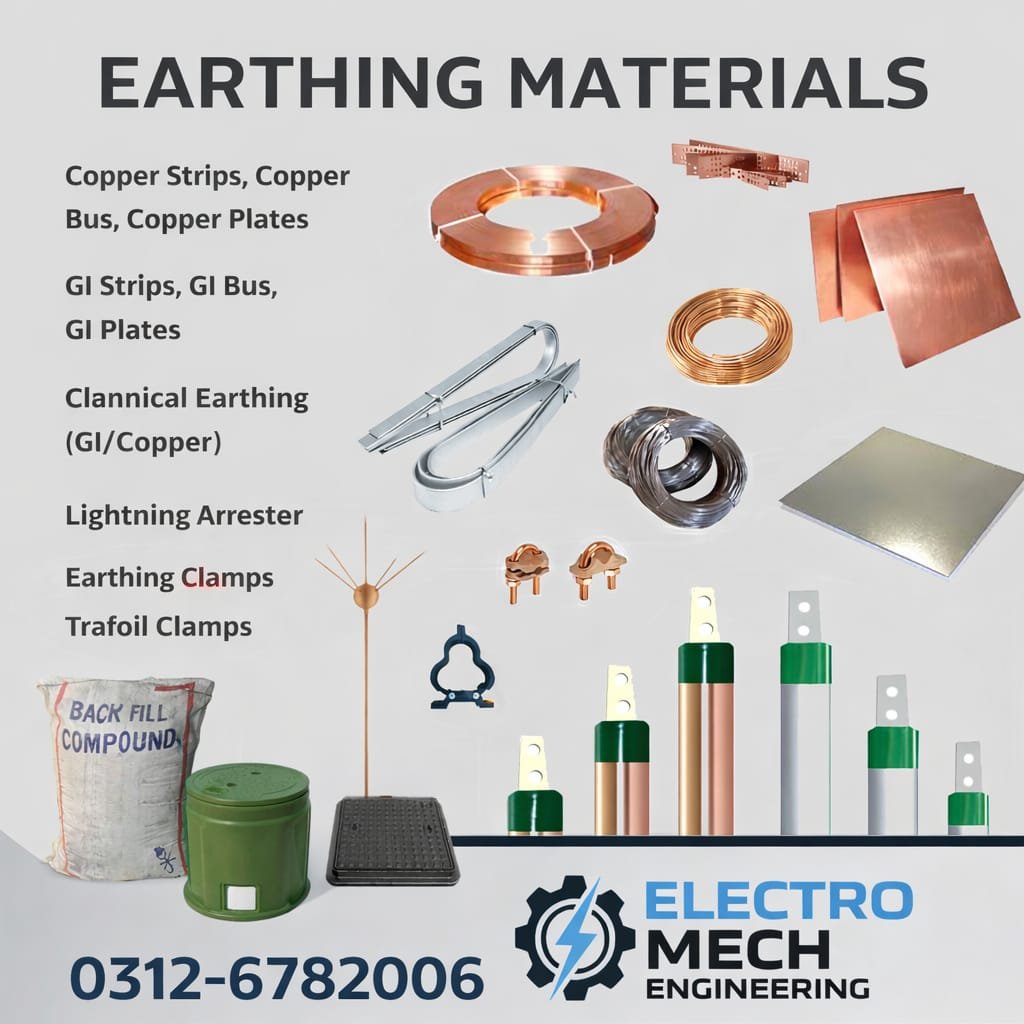
A reliable earthing system is one of the most important parts of any electrical installation. It protects people from electric shocks, safeguards appliances from fault current, and helps prevent fire hazards caused by leakage current.
Different earthing methods are used depending on the soil condition, budget, installation space, and type of building. Choosing the right earthing system ensures low earth resistance, long life, and better electrical safety.
In this blog, we will explain the different types of earthing systems and their practical applications in detail.
1) Plate Earthing
Plate earthing is one of the traditional and highly reliable grounding methods. In this system, a copper plate or GI (galvanized iron) plate is buried vertically in the ground and connected to the electrical system through an earth conductor.
The plate is usually surrounded by salt and charcoal to reduce soil resistance and improve conductivity.
Why It Is Used
- Uses copper or GI plates
- Provides stable grounding
- Good fault current dissipation
- Long service life
- Reliable for standard buildings
Applications
Best used in:
- Residential buildings
- Commercial plazas
- Schools
- Offices
- Small factories
- Apartment projects
Best For
Choose plate earthing when:
- Soil has normal moisture
- Long-term reliability is needed
- Residential and commercial use is the goal
- Standard electrical load is expected
2) Pipe Earthing
Pipe earthing is the most common and cost-effective earthing method used today. In this system, a perforated GI or copper pipe is buried vertically into moist soil.
Because of its simple design and affordable installation cost, it is widely used in homes and small industrial projects. It also requires relatively low maintenance compared to plate systems.
Why It Is Used
- Most economical option
- Easy installation
- Low maintenance
- Excellent conductivity in moist soil
- Suitable for general electrical systems
Applications
Ideal for:
- Homes
- Small offices
- Shops
- Small industries
- Workshops
- Warehouses
Best For
Use pipe earthing when:
- Budget is limited
- Moist soil is available
- Domestic installations are required
- Small industrial panels need protection
3) Rod Earthing
Rod earthing uses copper or GI rods that are driven deep into the ground. It is one of the easiest methods to install and is highly effective in areas where space is limited.
This method works especially well when multiple rods are connected together to achieve very low resistance values.
Why It Is Used
- Uses copper or GI rods
- Fast and easy installation
- Requires less digging
- Highly effective
- Great for compact spaces
- Low maintenance
Applications
Commonly used in:
- Telecom towers
- High-rise buildings
- Industrial control panels
- Substations
- Lightning protection systems
- Solar installations
Best For
Best suited when:
- Installation space is limited
- Fast setup is needed
- Multiple earth points are required
- Sensitive electrical systems are involved
4) Chemical Earthing
Chemical earthing is the modern and advanced version of conventional grounding systems. It uses special backfill compounds around the earthing electrode to retain moisture and maintain consistently low resistance.
This type is considered the best solution for dry, sandy, and rocky soil, where traditional earthing methods may fail. The chemical compound improves conductivity and reduces seasonal resistance changes.
Why It Is Used
- Uses conductive backfill compounds
- Maintains low resistance
- Long life span
- Minimal maintenance
- Corrosion resistant
- Reliable in all seasons
Applications
Best used in:
- Dry and rocky soil areas
- Solar plants
- Telecom towers
- Data centers
- Hospitals
- Industrial plants
- High-rise buildings
Best For
Choose chemical earthing when:
- Soil is dry or rocky
- Very low resistance is required
- Critical equipment protection matters
- Long-term maintenance-free performance is needed
How to Choose the Right Earthing System
The correct earthing system depends on your project requirements.
Choose Plate Earthing If:
- You need standard residential or commercial protection
- Soil moisture is normal
- A traditional method is preferred
Choose Pipe Earthing If:
- You want the most affordable solution
- It is for homes or small workshops
- Moist soil is available
Choose Rod Earthing If:
- Space is limited
- Fast installation is required
- Towers or solar structures need grounding
Choose Chemical Earthing If:
- Soil is rocky, dry, or sandy
- Critical systems need stable resistance
- Low maintenance is important
Final Thoughts
The right earthing system improves electrical safety, reduces equipment damage, and protects human life from leakage current and fault voltage.
Quick summary:
- Plate Earthing: reliable for homes and commercial buildings
- Pipe Earthing: most common and cost-effective
- Rod Earthing: easy installation and compact design
- Chemical Earthing: best for dry and rocky soil
A properly selected earthing system ensures safe current dissipation, low resistance, and long-term reliability for any electrical project.