Address
Near container Market Salamat Pura
Lahore

Different Types of Cable Trays & Where to Use Them

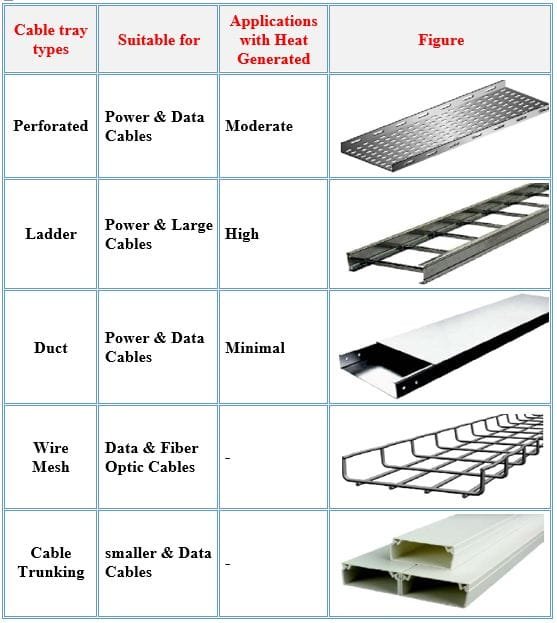
In every electrical installation, cable management plays a major role in safety, maintenance, and long-term performance. Whether the project is a factory, office building, hospital, data center, or small control panel, choosing the right cable tray type helps improve airflow, cable protection, and future expansion.
Different cable trays are designed for different environments. Some focus on heavy load capacity, while others prioritize ventilation, flexibility, or protection from dust and moisture. The right selection depends on cable weight, installation space, and environmental conditions.
This guide explains the different types of cable trays and where to use them in detail.
1) Ladder Type Cable Tray
The ladder type cable tray is one of the most commonly used tray systems in industrial projects. Its design looks like a ladder, with two side rails connected by cross rungs.
Why It Is Used
- Best for heavy-duty power cables
- Excellent ventilation and heat dissipation
- Ideal for long cable runs
- Strong enough for high load capacity
- Easy cable inspection and maintenance
Because of its open structure, heat escapes quickly, which makes it perfect for high-power electrical cables that generate heat.
Best Places to Use
- Industrial plants
- Power stations
- Refineries
- Manufacturing units
- Outdoor utility projects
- Long horizontal cable routes
Recommended For
Use ladder trays when the project includes:
- Large cable bundles
- Thick electrical power cables
- Long spans between supports
- Hot environments
2) Perforated Type Cable Tray
The perforated cable tray comes with small holes or slots in the base and side rails. These perforations allow moderate airflow while also offering better cable support than ladder trays.
This tray gives a perfect balance between ventilation and protection.
Why It Is Used
- Moderate ventilation
- Better support for smaller cables
- More protection than ladder trays
- Clean and organized cable routing
- Suitable for both power and control cables
Best Places to Use
- Commercial buildings
- Shopping malls
- Office floors
- Hospitals
- Schools
- Indoor electrical rooms
It is widely used in places where the cables need both air circulation and neat routing.
Recommended For
Best for:
- Medium cable loads
- Indoor wiring systems
- Mixed power and control cables
- Suspended ceiling installations
3) Solid Bottom Cable Tray
The solid bottom cable tray provides the highest level of cable protection. Since it has a fully covered bottom, it protects cables from:
- Dust
- Moisture
- Falling particles
- External damage
- Electromagnetic interference in some cases
This makes it ideal for sensitive cable installations.
Why It Is Used
- Maximum protection
- Safe for sensitive wiring
- Better shielding
- Keeps cables isolated
- Prevents contamination
Best Places to Use
- Clean rooms
- Laboratories
- Pharmaceutical plants
- Food production units
- Data centers
- Hospitals
- Sensitive control systems
Recommended For
Choose solid bottom trays when:
- Cleanliness is important
- Moisture protection is required
- Data or communication cables need extra safety
- The environment contains dust or chemicals
4) Wire Mesh (Basket) Cable Tray
The wire mesh cable tray, also called a basket tray, is lightweight, modern, and highly flexible. It is especially popular in IT infrastructure and networking systems.
Its open mesh structure makes cable entry and exit very easy.
Why It Is Used
- Lightweight design
- Fast installation
- Easy modifications
- Excellent airflow
- Flexible routing paths
- Cost-effective for data systems
Best Places to Use
- IT offices
- Data centers
- Server rooms
- Telecom rooms
- CCTV systems
- Networking projects
Recommended For
Perfect for:
- LAN cables
- Fiber optic cables
- Data cables
- Telephone systems
- Security cables
Because modern offices often need upgrades, wire mesh trays are preferred for frequent cable changes and expansions.
5) Channel Cable Tray
The channel cable tray is compact and narrow. It is mainly designed for small cable installations where only a few wires need support.
It is the best choice when space is limited.
Why It Is Used
- Compact design
- Low cost
- Quick installation
- Perfect for small cable runs
- Supports one or two cable routes
Best Places to Use
- Small offices
- HVAC systems
- Small machines
- Control panels
- Light commercial installations
- Residential service routes
Recommended For
Best for:
- Minimum wire use
- Small branch cable runs
- Low-voltage systems
- Limited installation space
How to Choose the Right Cable Tray
Before selecting a tray type, consider these factors:
1. Cable Load
Heavy power cables → Ladder Tray
Light data cables → Wire Mesh Tray
2. Ventilation Need
Maximum airflow → Ladder Tray
Moderate airflow → Perforated Tray
3. Environmental Conditions
Dusty or moist areas → Solid Bottom Tray
4. Installation Space
Small spaces → Channel Tray
5. Future Expansion
Frequent cable changes → Wire Mesh Tray
Final Thoughts
Selecting the correct cable tray is not only about cable support—it directly affects safety, maintenance, airflow, and future scalability.
A quick summary:
- Ladder Tray: heavy-duty industrial cables
- Perforated Tray: commercial and indoor use
- Solid Bottom Tray: clean and protected environments
- Wire Mesh Tray: IT and data systems
- Channel Tray: small and compact installations
The right cable tray system improves cable life, reduces overheating, and keeps the entire electrical setup professional and easy to maintain.